Mackenzie Lintern is the first MITO learner to complete the ‘Road to Success’ programme, a series of commercial road transport qualifications comprising of four micro-credentials (Introduction to Commercial Road Transport, Driver Safety, Mass and Dimensions, and Heavy Combination Vehicle Loading Fundamentals), and the New Zealand Certificate in Commercial Road Transport (Heavy Vehicle Operator) (Level 3).
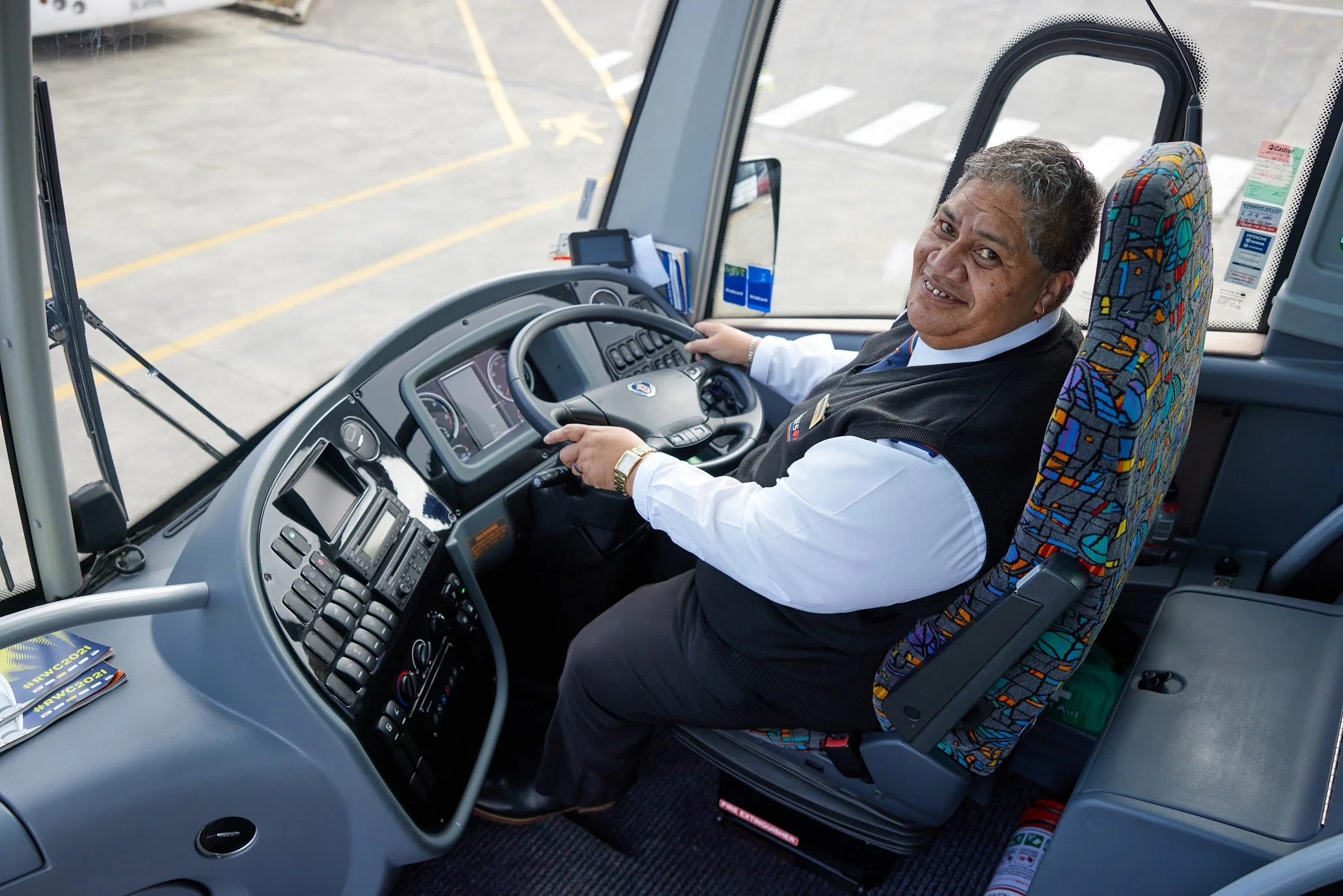
Her introduction to the road transport industry came through a temporary position, which soon evolved into a long-term career path. “I was covering for a driver on her maternity leave, and I ended up loving it, so I went on to get my Class 2 licence right after,” she says.
She praises the combination of practical and theory components in MITO’s programmes, saying, “It was good to be learning the content in person and through theory work at the same time—it helped reinforce a lot of the training.”
After two years at Mackley’s Carriers Limited and moving from a Class 2 to Class 5 licence, in addition to experience with hiabs (a truck with a crane mounted on a flatbed), she secured a job at NZ Cranes, where she’s now been for two years.
Mackenzie guides crane operators on site, hooks up loads, and drives trucks to set up cranes. But confidence in her role is something she’s had to learn over time.
“I think the biggest challenge for me is confidence. I will naturally doubt myself sometimes, but my co-workers are very supportive. I’ll doubt myself more than they doubt me.”
“Everyone’s ready to take you under their wing. They want to see you succeed as much as you want to succeed,” she says. “Your co-workers are the ones that will back you the most.”
Despite the occasional challenges, the variety of the job is a constant reward. “Every single day is different. You get to see so much of the country, you don’t get bored. And you meet a lot of cool people as well that you probably wouldn’t otherwise.”
In addition to driving trucks, Mackenzie’s also driving her career in another direction: the classroom.
Following her completion of the Road to Success programme, she was awarded a Keystone Trust and Inspiring Futures Foundation scholarship—support that’s helping her stay connected to the industry she loves, while preparing for a future in it that goes beyond the jobsite.
“I’m actually currently at university full time as well,” she says. While studying Business Analytics, she’s chosen to focus her elective courses around construction and transport. “Those are probably what I’m enjoying more than the Business Analytics,” she laughs.
“I definitely do want to use what I learn at uni within construction and transport—it’s what I really enjoy, and I’d like to stay involved in this industry for as long as I can.”
Looking back, she knows exactly what made the difference, and what she hopes others will take on board. “Take every opportunity you can to learn. It can get pretty fast-paced at times and quite busy, so take advantage when that chance is there.”
One small opportunity, like a temporary driving role, can be the start of something much bigger.
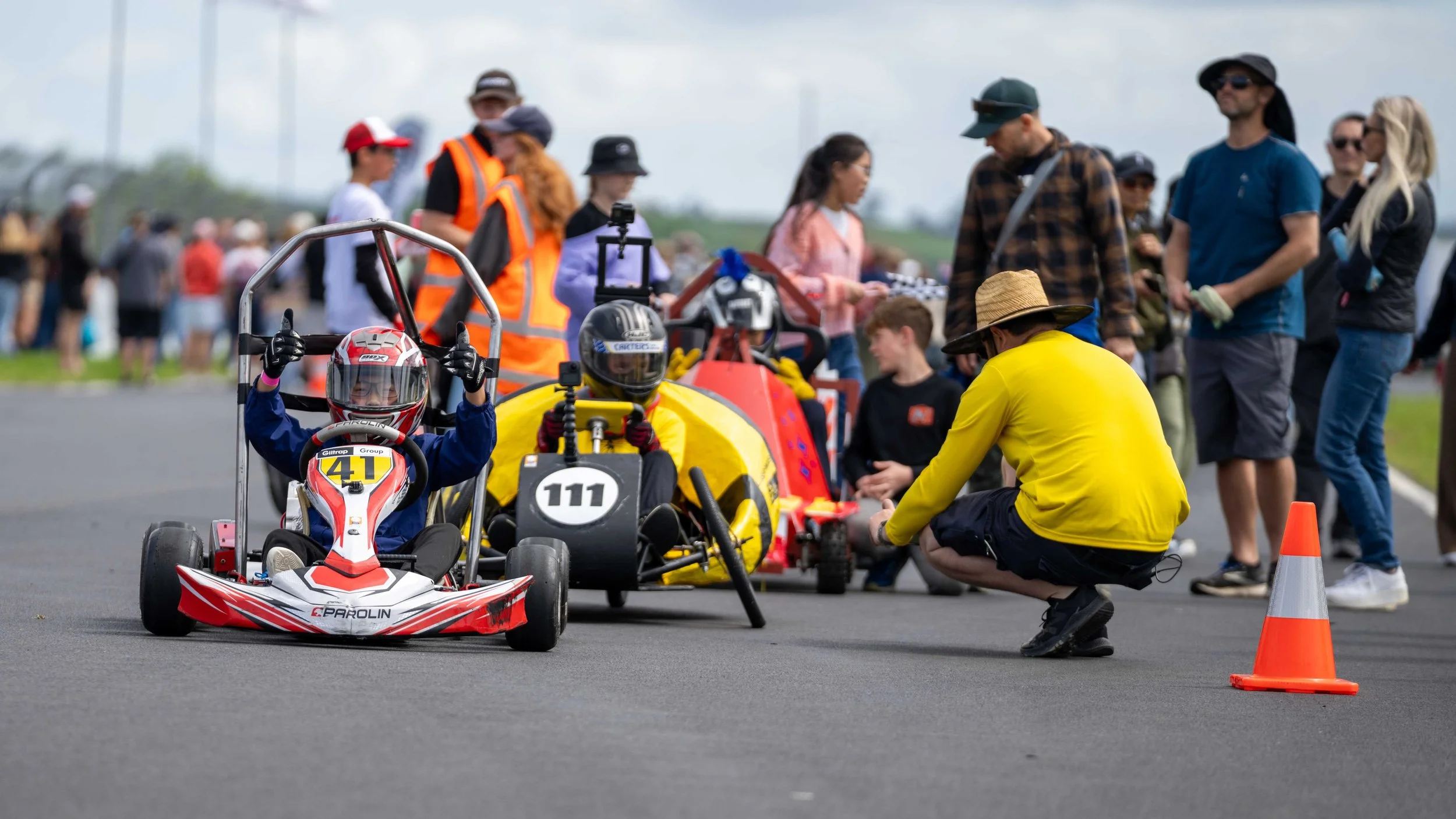
For most students in Aotearoa, the experience of designing and welding together an electric kart’s chassis is something entirely new, and so is the idea of a career in engineering.
This is where a free, nationwide programme from EVolocity connects the dots, and the Inspiring Futures Foundation (IFF) is proud to be backing them as a Premier Sponsor.
EVolocity's core programme gives Year 7–13 students the creative freedom to design, engineer, and build their own electric karts or bikes, using an electric motor kit as their starting point. Along the way, these students pick up skills including project management, teamwork, CAD design, and welding.
The programme runs across Auckland, Bay of Plenty/Rotorua, Waikato, Taranaki, Manawatū, Wellington, Nelson, and Canterbury/Otago, with teams working alongside teachers and mentors before competing at Regional Finals.
Jo Morgan, Head of Partnerships at EVolocity Charitable Trust, said the IFF’s belief and advocacy will be genuinely transformative in answering the call-to-action for more engineers and youth with engineering skills.
“We’re doing everything we can to inspire rangatahi into engineering and innovation, however, securing sustainable funding is always a challenge. IFF stepped in at exactly the right moment.
“A multi‑year commitment of this scale gives us the stability and runway we need to grow our impact as a charity.”
IFF Convenor Louise Sixton, says that, for IFF, partnerships like this go far beyond funding, especially when considering a national shortage of engineers.
“EVolocity represent mentorship, the opportunity for young people to try something new, and a doorway towards potential STEM careers. It’s exciting that, together, IFF and EVolocity are bridging the gap between the classroom and industry.”
CEO of and co-founder of Heartlab, Will Hewitt (25) competed in EVolocity at just 15 years old while at Nelson College. Three years later, he co-founded HeartLab, a cloud-native cardiac imaging platform that uses AI to support cardiologists across New Zealand, Australia, and the United States. At the time, he credited EVolocity for giving him an engineer's mindset and the critical thinking skills he uses every day.
Jackson Crawford, formerly of Mahurangi College, took a similar path. He went from building his first electric vehicle as an EVolocity student to becoming an Avionics Team Lead at Dawn Aerospace. Jackson is now working on a next-generation spaceplane designed to operate in micro-gravity environments. He has said that EVolocity gave him hands-on exposure to real-world skills and a head start over many of his peers at university.
With no government funding, Morgan says EVolocity relies entirely on the financial support of corporate sponsors and funding partners to deliver the programme.
“This grant has lifted a significant weight off our shoulders, and we are deeply grateful for IFF’s support.”
Visit the Inspiring Futures Foundation website for more information on the grants available: www.inspiringfutures.nz